



The race to SAP S/4HANA is entering a critical phase. While some organisations are already realising the benefits of modern ERP and digital compliance, many others remain constrained by complexity, cost, and resource limitations. Yet delaying migration carries growing risks, particularly as governments accelerate digital tax enforcement worldwide. SAP DRC is now playing a pivotal role in this transition by helping organisations modernise e-invoicing, statutory reporting, and regulatory compliance processes. But will organisations be really ready by 2027? Read to find out!
Table of contents
- The SAP clock is ticking
- The current state of SAP S/4HANA migration
- Why are organisations still delaying migration?
- Will SAP really stop support in 2027?
- Why SAP DRC is becoming a migration driver?
- The growing compliance risks for ECC customers
- The technical reality of migrating SAP DRC to S/4HANA
- The rise of PEPPOL and B2G integration
- What separates successful SAP S/4HANA migrations?
- Early planning
- Strong data governance
- Compliance-led transformation
- Hybrid migration strategies
- Will most organisations actually be ready by 2027?
- The final takeaway
The SAP clock is ticking
For thousands of SAP customers worldwide, 2027 is no longer a distant milestone. It marks the official end of mainstream maintenance support for SAP ECC, pushing organisations toward migration to SAP S/4HANA. Yet despite years of preparation, many businesses are still struggling to move at the pace SAP initially anticipated.
The reality is becoming increasingly clear: not every organisation will make it to S/4HANA by the 2027 deadline.
At the same time, growing digital tax mandates, e-invoicing regulations, and statutory reporting requirements are creating additional pressure. Businesses are not simply migrating ERP systems anymore; they are redesigning how compliance, reporting, and digital transactions operate globally. This is where SAP Document and Reporting Compliance (SAP DRC) is becoming central to the conversation.
This article explores the true state of S/4HANA migration in 2026, why organisations continue to delay adoption, and how SAP DRC is influencing migration priorities.
The current state of SAP S/4HANA migration
Although SAP has promoted S/4HANA adoption for years, migration progress across the market remains uneven.
Research from multiple industry surveys shows that many organisations are still in the planning or proof-of-concept stages rather than full deployment. According to several research, only a quarter of surveyed organisations had fully deployed S/4HANA, while another quarter remained in proof-of-concept phases.
However, the momentum is increasing. Research from ASUG indicates that moving to SAP S/4HANA remains one of the top strategic priorities for SAP customers in 2024 and 2025. Organisations are actively investing in:
- ERP modernisation
- Automation initiatives
- Process standardisation
- SAP and non-SAP integration
- Data governance improvements
At the same time, organisations continue to face major barriers, including:
- Budget constraints
- Complex integrations
- Data maintenance challenges
- Shortages in S/4HANA expertise
- Limited internal resources
The result is a migration landscape where intent is high, but execution remains slower than expected.
Why are organisations still delaying migration?
The reasons behind slow S/4HANA migration are rarely technical alone. For many enterprises, migration affects nearly every business function, making transformation significantly more complex than a standard ERP upgrade.
Several recurring challenges continue to delay projects:
Project complexity
Large enterprises often operate highly customised ECC environments built over decades. Migrating these systems requires:
- Data restructuring
- Process redesign
- Custom code remediation
- Integration rebuilding
- Compliance validation
These projects frequently become multi-year transformation programmes rather than straightforward migrations.
Cost pressures
Migration to SAP S/4HANA requires significant investment across:
- Infrastructure
- Licensing
- Consulting
- Internal staffing
- Change management
- Testing and compliance validation
For organisations already managing economic uncertainty, the investment can be difficult to justify without a clear business case.
Skills shortages
Research highlights that S/4HANA expertise remains one of the largest capability gaps inside organisations. Skilled SAP resources, especially in areas such as SAP DRC, tax technology, and integration architecture, remain in high demand.
Operational disruption concerns
Many organisations remain cautious about introducing operational instability into core finance, procurement, or supply chain systems. This becomes even more sensitive when compliance processes are directly impacted.
Will SAP really stop support in 2027?
Many organisations remain cautious about introducing operational instability into core finance, procurement, or supply chain systems. This becomes even more sensitive when compliance processes are directly impacted.
Technically, mainstream support for SAP ECC is still scheduled to end in 2027. However, SAP has already introduced extended support options for certain customers.
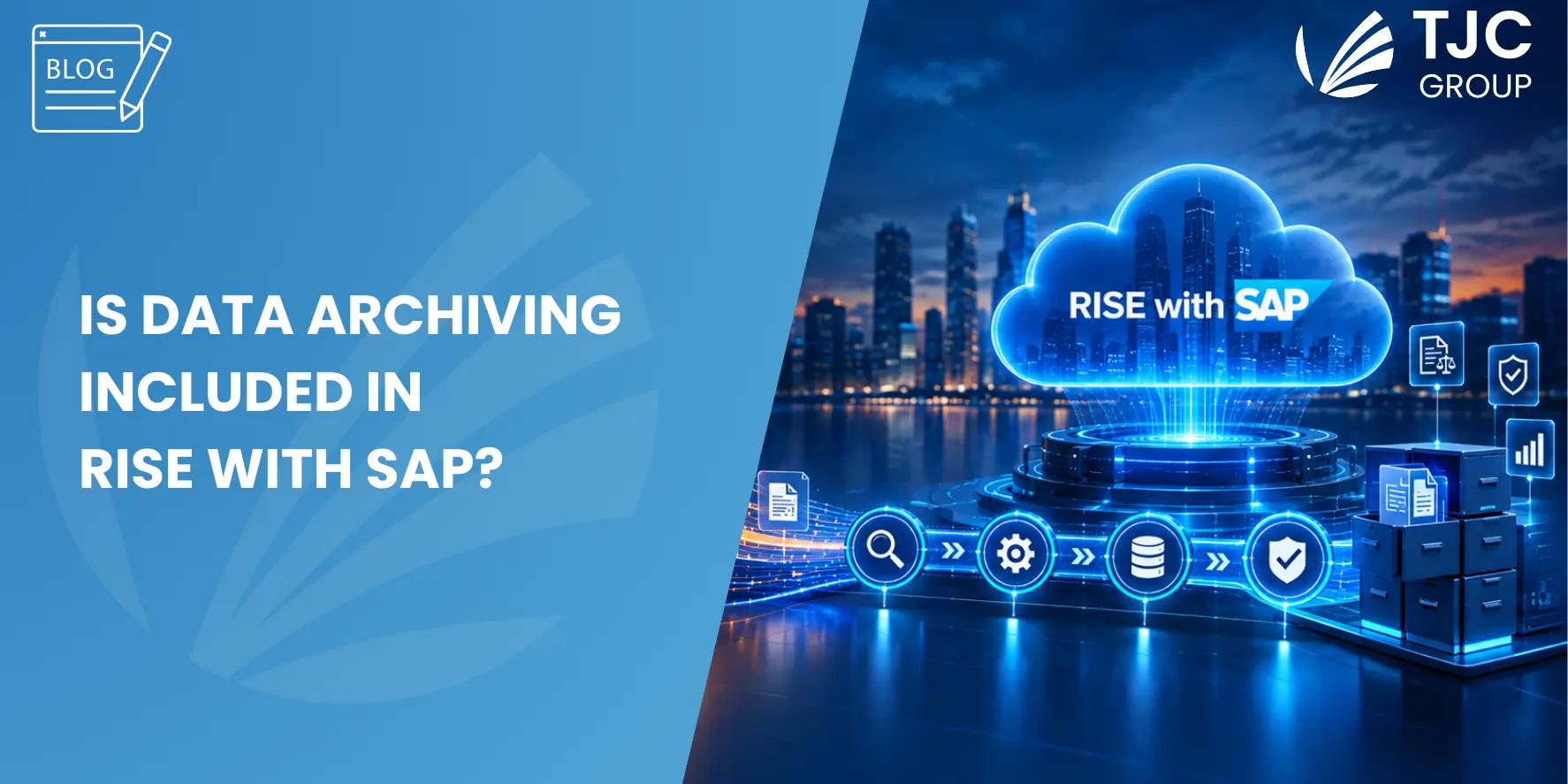
Research indicates that organisations using “RISE with SAP” programmes may continue operating legacy systems until 2033 under specific arrangements.
While this provides temporary relief, it does not eliminate the long-term urgency.
Extended support often introduces:
- Higher maintenance costs
- Reduced innovation access
- Increased compliance risks
- Greater operational complexity
- Longer-term technical debt
In practice, delaying migration may simply postpone the problem while increasing future costs.
Why SAP DRC is becoming a migration driver?
One of the most significant changes influencing S/4HANA migration is the rapid expansion of global e-invoicing and digital reporting regulations.
Governments worldwide are introducing:
- Continuous transaction controls (CTCs)
- Real-time tax reporting
- Mandatory e-invoicing
- PEPPOL frameworks
- SAF-T reporting
- Digital VAT compliance
These regulations require ERP systems to support increasingly sophisticated compliance capabilities.
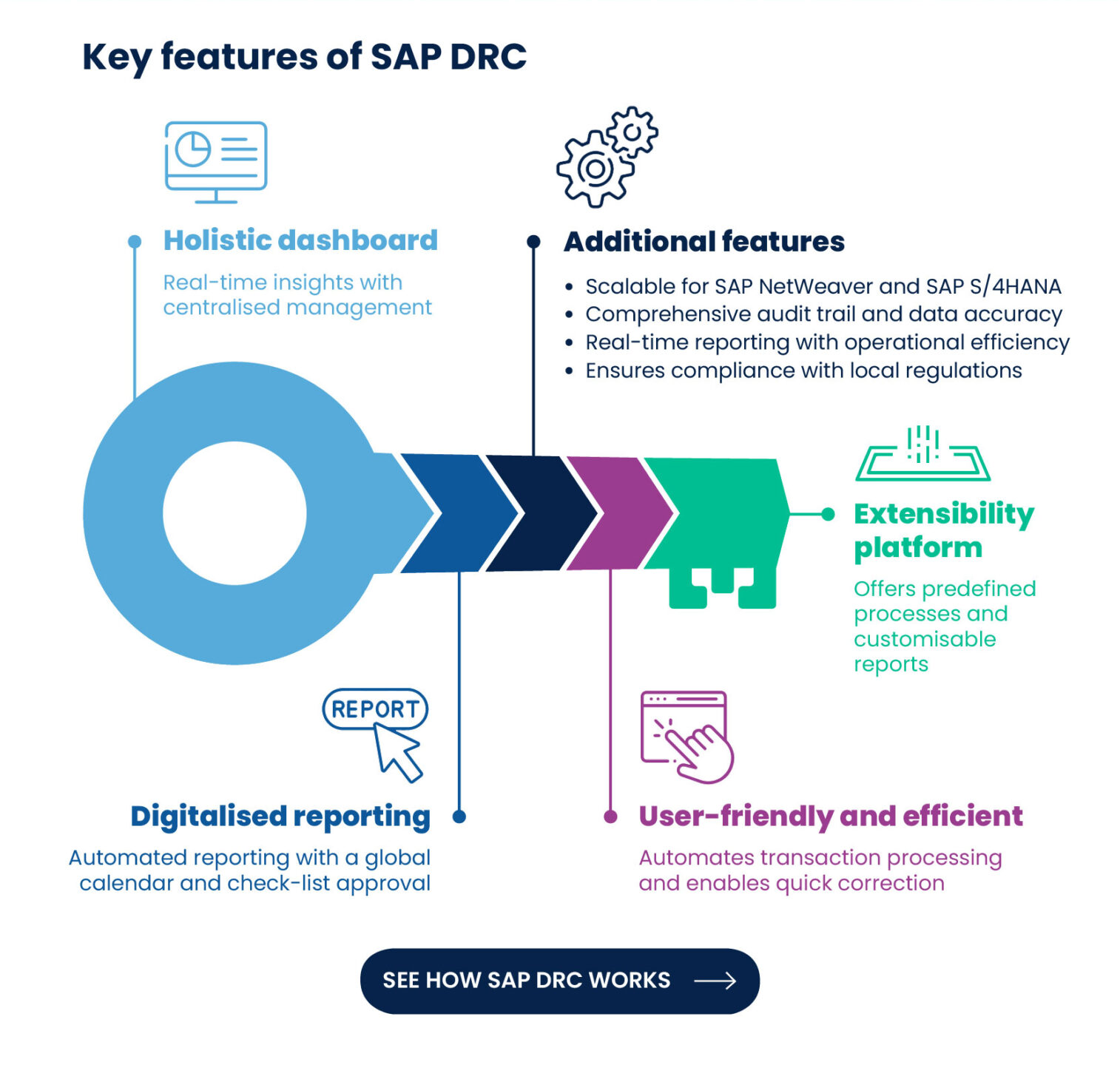
SAP Document and Reporting Compliance (SAP DRC) has emerged as SAP’s strategic platform for managing these requirements.
SAP DRC consists of two major components:
- An embedded component within ECC or S/4HANA that manages eDocuments, mappings, monitoring, and business process integration.
- A cloud-based component on SAP Business Technology Platform (BTP) responsible for transmitting electronic documents to tax authorities or business partners.
This architecture enables organisations to support modern digital compliance frameworks while integrating with local and global tax systems.
The growing compliance risks for ECC customers
For organisations remaining on ECC, compliance risks are becoming increasingly serious.
As regulatory requirements evolve, ECC customers risk losing access to:
- Regulatory updates
- New legal formats
- Country-specific compliance support
- Updated e-invoicing structures
Without ongoing SAP maintenance, businesses may struggle to remain compliant with rapidly changing tax mandates.
This is particularly important because SAP DRC statutory reporting functionality is only fully supported in SAP S/4HANA.
For organisations operating across multiple countries, this creates a strong incentive to accelerate migration.
The technical reality of migrating SAP DRC to S/4HANA
Migrating SAP DRC environments from ECC to S/4HANA introduces its own technical considerations.
One major change involves the Application Interface Framework (AIF), which becomes integrated directly into SAP S/4HANA. Existing custom AIF tables and enhancement implementations used in ECC become obsolete and must be migrated carefully.
The migration process typically includes:
- Installing SAP Note 2421589
- Executing migration programme EDOC_COPY_AIF_MSG_INDEX_TAB
- Activating AIF Business Configuration Sets
- Deactivating obsolete enhancements
Organisations also need to reassess existing statutory reporting frameworks, including VAT returns, SAF-T reporting, and country-specific obligations before implementing SAP DRC in S/4HANA migration.
This means compliance migration is not simply a technical upgrade — it requires regulatory, operational, and architectural planning.
The rise of PEPPOL and B2G integration
Another major driver behind SAP DRC adoption is the expansion of PEPPOL and business-to-government (B2G) integration models.
SAP DRC now supports:
- Electronic invoice exchanges through PEPPOL networks
- Government reporting integrations
- Automated eDocument processing
- Cross-border compliance frameworks
As countries accelerate mandatory e-invoicing programmes, businesses increasingly need scalable digital compliance infrastructure that ECC environments may struggle to support long term.
What separates successful SAP S/4HANA migrations?
Research consistently shows that successful SAP S/4HANA programmes share several characteristics:
Early planning
Organisations that begin migration planning early have greater flexibility around budgeting, resource allocation, and phased transformation.
Strong data governance
Poor data quality remains one of the biggest migration risks. Successful organisations prioritise:
- Data cleansing
- Archiving
- Master data governance
- Process standardisation
Compliance-led transformation
Businesses increasingly treat tax and compliance as strategic migration priorities rather than secondary considerations.
Hybrid migration strategies
Many organisations are combining:
- Brownfield migrations
- Selective data transitions
- Cloud ERP adoption
- SAP DRC modernisation
This allows more flexible transformation timelines.
Will most organisations actually be ready by 2027?
Based on current market trends, it appears unlikely that all ECC customers will complete SAP S/4HANA migration by 2027.
Many organisations are still:
- Evaluating business cases
- Managing resource shortages
- Delaying investments
- Addressing compliance complexity
- Reassessing cloud strategies
However, the challenge is no longer simply about meeting an SAP deadline. The bigger issue is whether organisations can continue supporting:
- Modern compliance obligations
- Global e-invoicing mandates
- Digital reporting frameworks
- Real-time tax controls
- Scalable business transformation
In this environment, SAP DRC is becoming more than a compliance solution — it is increasingly a core component of enterprise ERP modernisation.
The final takeaway
The organisations that succeed will not simply migrate systems — they will use the transition as an opportunity to modernise operations, simplify compliance, and build a more resilient digital foundation for the future.
As organisations navigate the transition from SAP ECC to SAP S/4HANA, managing compliance, e-invoicing, and statutory reporting requirements has become just as critical as the technical migration itself. This is where TJC Group can support businesses throughout their transformation journey.
With deep expertise in SAP environments, SAP DRC implementation, and regulatory compliance management, TJC Group helps organisations simplify complex migration and compliance challenges. From assessing ECC readiness and optimising legacy data to supporting SAP DRC deployment and statutory reporting modernisation, TJC Group enables businesses to reduce risk while accelerating transformation timelines.
FAQs
Q1. What happens if my organisation does not migrate to SAP S/4HANA by 2027?
Answer:
When mainstream maintenance support for SAP ECC ends in 2027, organisations that have not migrated will lose access to standard SAP updates, including regulatory patches and new compliance features. While SAP has introduced extended support options (with some arrangements allowing operation until 2033 through programmes such as RISE with SAP), these come with higher maintenance costs, reduced access to innovation, and increased compliance risks. Delaying migration does not remove the need to transition; it simply postpones the challenge while potentially increasing future costs and technical debt.
Q2. What is SAP DRC, and why is it important for the S/4HANA transition?
Answer:
SAP Document and Reporting Compliance (SAP DRC) is SAP’s strategic platform for managing e-invoicing, statutory reporting, and digital tax compliance. It consists of two components: an embedded module within SAP ECC or SAP S/4HANA that handles eDocuments, mappings, and monitoring, and a cloud-based component on SAP Business Technology Platform (BTP) that transmits electronic documents to tax authorities or business partners. SAP DRC is important because its full statutory reporting functionality is only fully supported in S/4HANA, making it a key driver for migration, especially as governments worldwide accelerate digital tax enforcement.
Q3. What compliance risks do organisations face by staying on SAP ECC?
Answer:
Organisations remaining on SAP ECC face growing compliance risks as global e-invoicing mandates, continuous transaction controls, and real-time tax reporting requirements evolve. SAP ECC customers risk losing access to regulatory updates, new legal formats, country-specific compliance support, and updated e-invoicing structures. This is particularly critical for businesses operating across multiple jurisdictions, where failure to keep pace with changing regulations can result in non-compliance penalties and operational disruption.
Q4. What factors contribute to a successful SAP S/4HANA migration?
Answer:
Successful migrations share several key characteristics. Early planning (ideally 12 to 18 months ahead) provides greater flexibility for budgeting and resource allocation. Strong data governance, including data cleansing, archiving, and master data management, reduces one of the biggest migration risks. Treating compliance as a strategic priority rather than a secondary consideration ensures that tax, e-invoicing, and statutory reporting requirements are addressed from the outset. Finally, adopting hybrid migration strategies that combine brownfield approaches, selective data transitions, and SAP DRC modernisation allows organisations to manage transformation timelines more flexibly.