




Author: Kristin Gerling, Co-CEO of TJC Americas
As organizations migrate to SAP SuccessFactors Employee Central Payroll (ECP), they gain a modern, cloud-native payroll engine built for agility. But what happens to the years — sometimes decades — of historical payroll data that cannot make the journey? In many countries, HR data cannot simply be deleted a few years after an employee leaves. While standard personnel and payroll records are often retained for 5 to 10 years, some categories of HR data must legally be preserved for several decades. This article explores the challenges of payroll data migration, explains how TJC Group bridges the gap, and examines the broader compliance obligations surrounding HR data retention.
Table of contents
- Migrating to SAP SuccessFactors Employee Central Payroll
- The challenges of payroll data migration
- Preserving access to payroll legacy data
- Managing HR data for the long term: retention, compliance, and security
- Data privacy laws and retention periods
- How ELSA addresses long-term HR data management
- Conclusion and takeaways
Migrating to SAP SuccessFactors Employee Central Payroll
HR transformation is accelerating. With SAP announcing the end of mainstream maintenance for SAP ERP HCM by December 2027, organizations are moving to cloud-based HR solutions such as SAP SuccessFactors at pace. At the heart of this shift sits Employee Central Payroll (ECP), a modern payroll platform designed to integrate seamlessly with SAP SuccessFactors and drive agility across HR and finance operations.
However, migration to ECP is not simply a system switch — it is a structural transformation. Legacy payroll systems hold years of sensitive employee data: pay statements, tax records, benefits calculations, and pension information. Not all of this data migrates cleanly into the new environment, and much of it is not intended to. This creates a genuine challenge for compliance teams, data protection officers, and HR managers who must ensure that historical records remain accessible, auditable, and secure.
In this article, we examine the specific challenges organizations face when migrating payroll data. We’ll also highlight how Enterprise Legacy System Application (ELSA) provides a compliant solution for legacy data, and why long-term HR data retention demands a dedicated strategy.
The challenges of payroll data migration
SAP SuccessFactors Employee Central Payroll (ECP) is a widely adopted, cloud-hosted payroll solution that integrates with Employee Central Core to deliver a unified experience across HR administration and payroll processing. With over 1,800 customers and 100 million pay statements processed monthly across multiple countries, it is a proven platform at enterprise scale.
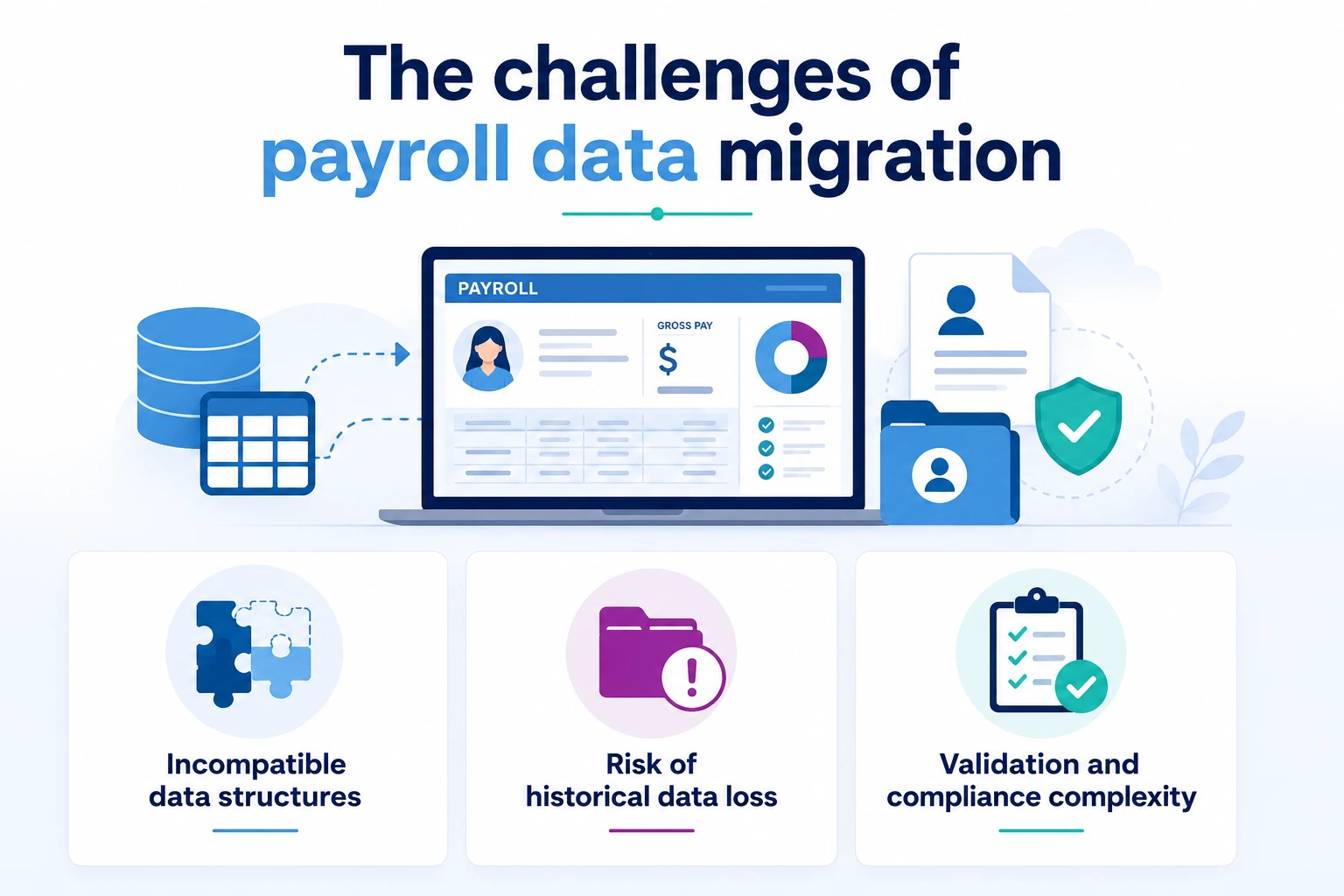
Yet, while ECP powers the future of payroll, it does not automatically absorb all historical data from legacy systems. This is where careful planning becomes essential. Migrating to SAP Employee Central Payroll involves far more than transferring data from one system to another. Organizations frequently encounter the following challenges:
- Incompatible data structures. Legacy payroll systems often use data formats and schemas that do not align with ECP’s modern data model. Historical records may be stored in proprietary structures that require significant transformation — or simply cannot be mapped into the new environment.
- Risk of historical data loss. During migration, there is a real risk that historical payroll records, attachments, and supporting documents are left behind or become inaccessible. Complex querying may be required to retrieve data from legacy formats, and in some cases, records may be lost entirely if the old system is decommissioned without a proper data preservation strategy.
- Validation and compliance complexity. Ensuring payroll accuracy and regulatory compliance across two different systems is inherently complex. Validation difficulties arise when attempting to reconcile historical data against new structures, particularly for organisations operating across multiple jurisdictions with varying tax and labour regulations.
These challenges make it clear that while ECP represents the future of payroll processing, legacy payroll data must be managed with equal care. Ignoring it creates compliance gaps, audit exposure, and operational risk. For a broader understanding of the risks associated with maintaining outdated systems, see our article on the hidden costs of legacy systems.
Preserving access to payroll legacy data
When a legacy payroll system is decommissioned, the data it holds does not lose its value or its regulatory significance. Organisations must find a reliable, compliant way to preserve access to historical payroll records — including pay statements, tax filings, benefits calculations, and supporting documents such as employment contracts and correspondence. Without a clear strategy, this data risks becoming inaccessible, fragmented, or lost entirely, leaving gaps that can surface during audits, employee enquiries, or legal proceedings.
In some countries and industries, HR data must be retained for over 30 years. These are not optional guidelines — failure to produce records when required can result in regulatory penalties, failed audits, and legal liability.
A robust legacy data archive should provide secure, long-term storage with role-based access controls and full audit trails, ensuring that only authorised personnel can retrieve sensitive information and that every access event is logged. It must also support attachment retrieval, so that supporting documents remain available alongside structured payroll data. Compliance with data privacy regulations — from GDPR to local labour laws — should be built into the platform by design, not added as an afterthought.
ELSA, a purpose-built solution for legacy payroll data
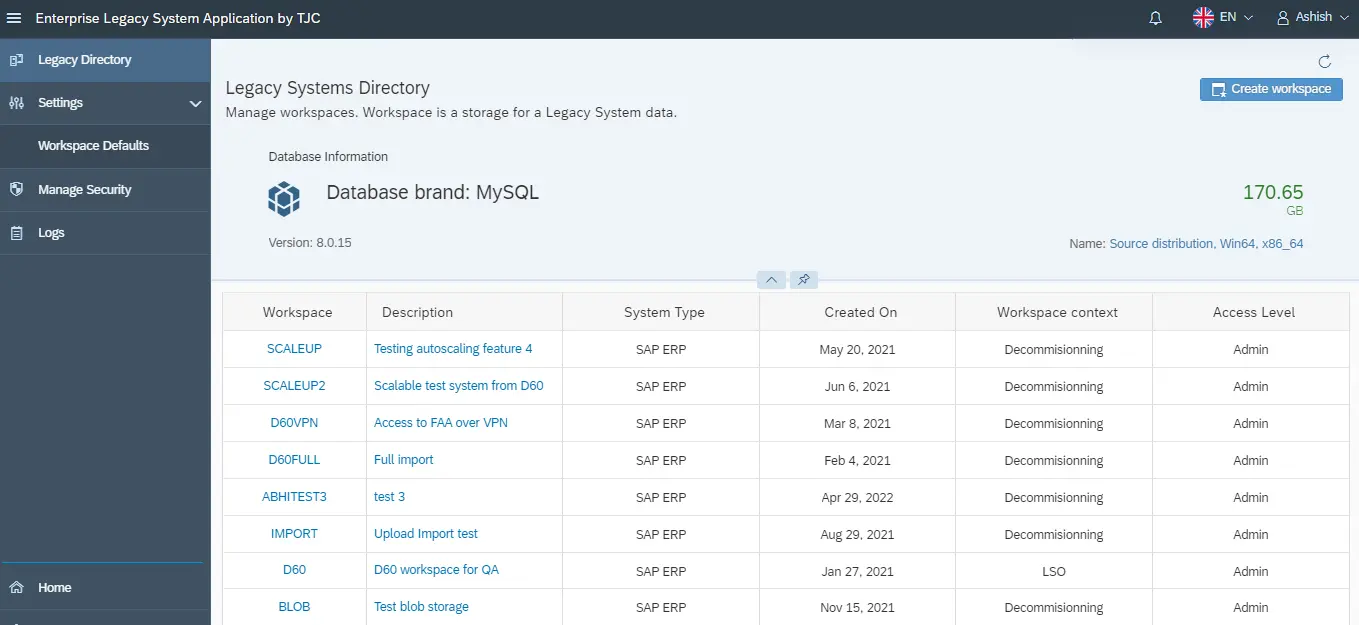
TJC Group’s Enterprise Legacy System Application (ELSA) is an SAP-certified archive platform, built on the SAP Business Technology Platform (BTP), that addresses precisely these requirements. It provides a single, compliant repository for legacy payroll data, removing the dependency on outdated systems while keeping your organisation prepared for audits, employee enquiries, and regulatory obligations. To learn more about the broader decommissioning process, read our guide on legacy system decommissioning in S/4HANA migration.
Once your legacy payroll system is retired, ELSA ensures that historical data remains fully accessible without the need to maintain the old infrastructure.
More precisely, ELSA provides:
- Secure, compliant access to historical data. All legacy payroll records — including pay statements, tax filings, and benefits calculations — are preserved in a secure, auditable repository. There is no need to keep legacy systems running simply to retrieve historical information.
- Controlled user access with full audit trails. ELSA supports role-based access controls and maintains comprehensive audit trails, ensuring compliance with GDPR, local data privacy regulations, and internal governance policies. Only authorised personnel can access sensitive payroll information, and every access event is logged.
- Attachment retrieval. Supporting payroll documents — such as employment contracts, tax forms, and benefits correspondence — remain accessible alongside structured data. This is critical for responding to employee enquiries, audits, and legal requests.
By providing a single, compliant archive for all legacy payroll data, ELSA removes the dependency on outdated systems while keeping your organization prepared for audits, employee enquiries, and regulatory requirements.
To learn more about the broader decommissioning process, read our guide on legacy system decommissioning in S/4HANA migration.
Reducing TCO and preparing for AI
Decommissioning legacy payroll systems is not only a compliance exercise — it delivers significant financial benefits. Every legacy system that remains operational carries ongoing costs: licensing fees, infrastructure maintenance, security patching, and the specialist knowledge required to support ageing technology. Removing these systems from your landscape directly reduces the total cost of ownership (TCO) of your SAP environment.
ELSA amplifies these savings by eliminating the need to retain legacy infrastructure purely for data access purposes. Organizations have reported reductions of up to 70% in their legacy system footprint after implementing ELSA.
Beyond cost reduction, ELSA also positions organisations for innovation. Legacy payroll and HR data is extracted into parquet format — a columnar storage format optimised for big data processing and analytics. This makes historical datasets immediately usable for machine learning models and advanced analytics.
Furthermore, ELSA supports seamless integration with SAP Datasphere, enabling organisations to combine historical HR data with current operational data for richer insights. Whether you are analysing workforce trends, modelling pension liabilities, or building predictive attrition models, having clean, structured historical data is a prerequisite — and ELSA delivers it in an AI-ready format.
Managing HR data for the long term: retention, compliance, and security
The challenges of payroll data migration are part of a much larger issue: the long-term management of HR data. Payroll records are just one category within a broader set of sensitive employee information that organisations are legally obligated to retain — often for far longer than many realise.
Why HR data retention matters
HR data carries heightened sensitivity and some of the most demanding compliance requirements of any data category within an organisation. Employee records, payroll history, pension information, and benefits data all require the highest levels of protection and, crucially, long-term accessibility.
The retention periods mandated by law vary significantly by jurisdiction and data type, but they are consistently substantial. For multinational organisations, understanding these differences is essential. Here we are outlining some examples of the different retention periods in the USA, France, Germany and the United Kingdom that illustrate the geographical differences.
United States
Under the Fair Labor Standards Act (FLSA), payroll records must be retained for at least 3 years, and wage calculation records for 2 years. However, payroll tax records typically require 4 years of retention, and many states impose longer periods of 4 to 6 years. Records related to toxic substance or chemical exposure must be kept for 30 years after employment ends. The Society for Human Resource Management (SHRM) recommends retaining payroll records for at least five years — or indefinitely — to mitigate legal risk.
Additionally, under the U.S. law, the Employee Retirement Income Security Act (commonly known as ERISA) requires pension plan records to be kept in order to validate, explain and clarify all information submitted to the government, usually for a minimum of six years. This means that if your organization offers or offered a pension plan, the legacy data must be available for a much longer period.
The retention periods vary depending on the employee benefits. US companies that offer pensions plans must retain the records for at least six years from the filing date of the Form 550. However, some records used to determine employee benefits must be retained indefinitely. For further information, check the U.S. Department of Labor (DOL)
The US has several industry-specific long-term retention rules:
- Under Occupational Safety and Health Administration (OSHA) regulations, employee medical and exposure records relating to toxic substances or harmful physical agents must generally be retained for the duration of employment plus 30 years.
- Common industries affected are:
- Chemical manufacturing
- Oil & gas
- Pharmaceuticals
- Nuclear energy
- Heavy industry
- Healthcare
France
The Code du travail requires employee payroll and HR records to be retained for a minimum of 5 years after the end of employment. The commercial code extends this to 10 years for company financial data, which can encompass payroll-related records. Critically, pension-related documents must often be retained until the liquidation of pension rights — which in practice can mean 30 years or more, given that France’s legal retirement age is 64.
These are some examples of situations where the retention period of HR files in France would be above 30years.
- Exposure records for asbestos or hazardous substances may require retention for 40 years.
- Pension and occupational accident records
Germany
The German Commercial Code (Handelsgesetzbuch) and German Fiscal Code (Abgabenordnung) mandate retention of payroll and tax documents for 6 to 10 years. Social security records must be maintained for a minimum of 30 years. From December 2025, Germany will also require mandatory electronic time tracking for all employers, adding further documentation obligations.
Germany has long retention requirements linked to pensions and social security:
- Company pension documentation may need to be retained for up to 30 years after employment termination.
- Occupational exposure and health surveillance records can also extend to 30 years under workplace safety regulations.
United Kingdom
Payroll records must be retained for at least 6 years, with HMRC retaining the right to assess unpaid PAYE and National Insurance for up to 20 years in cases of deliberate non-compliance. Pension benefits records require 12 years of retention from the end of any benefit payable. The Employment Rights Act 2025, taking effect from April 2026, introduces new record-keeping obligations for annual leave and holiday pay. Find further information on HRMC website and on the 2025 to 2026 guidance: Employer further guide to PAYE and National Insurance contributions
In the UK, certain employment and occupational health records must be retained for decades:
- Personnel and pension records in parts of the public sector were historically recommended to be kept until age 85 or even age 100 for pension validation purposes.
- Records related to exposure to hazardous substances may require:
- 40 years for compressed air exposure records
- 50 years for ionising radiation exposure records
- Childcare or vulnerable adult sector records may need to be kept for 25 years or more after employment ends.
Some examples are:
- NHS staff exposed to radiation
- Shipyard or construction workers exposed to asbestos
- Nuclear industry employees
Japan
In Japan, HR data retention requirements are governed by a combination of labour law, tax law, social insurance regulations, and privacy legislation under the Act on the Protection of Personal Information (APPI). Japan does not generally impose the standard 30+ year retention periods seen in some Western countries. However, certain categories of HR and employment records do require long-term preservation.
Here are the main retention periods relevant to HR data in Japan:
- Payroll and wage records: employers must generally retain wage ledgers, payroll records, and employee attendance records for at least 5 years under the Labour Standards Act.
- Employment-related documents: contracts, employee registers, and dismissal-related records are also typically subject to a 5-year retention period.
- Tax-related payroll documentation: salary tax records and withholding documentation generally require retention for 7 years under Japanese tax regulations.
- Social insurance and pension records: employee pension and social insurance documentation often requires long-term retention because benefits may need to be validated many years later.
- Occupational health records: records relating to workplace accidents, hazardous exposure, or employee medical surveillance may require extended retention periods depending on the industry and type of exposure.
Japan also has strict privacy obligations under APPI. Find more about it on the blog article Data protection law in Japan: a guide to understand APPI
For multinational organisations operating SAP HR or payroll systems in Japan, this creates a familiar challenge: balancing long-term retention obligations with strict data privacy and security requirements. As a result, many organisations implement structured archiving, SAP ILM policies, or legacy system decommissioning solutions to preserve historical HR data securely without maintaining obsolete HR systems indefinitely.
The following chart shows a bird’s-eye view of the above information:
| Country | Main laws regulating HR data | Typical HR data retention periods |
| France | GDPR, French Data Protection Act, Labour Code, Social Security Code, Tax Code | Payroll slips: 5 years by employer, electronic availability for 50 years or until the employee turns 75. Staff register: 5 years after employee departure. Candidate data: generally up to 2 years if not hired. |
| United States | Federal laws including Fair Labor Standards Act (FLSA), Equal Employment Opportunity Commission (EEOC) regulations, Age Discrimination in Employment Act (ADEA), IRS regulations, plus state privacy and employment laws | Payroll records: minimum 3 years under FLSA. Records related to hiring, promotion, termination and personnel actions: typically 1 year, or longer for larger employers/federal contractors. Tax records: generally 4 years. Some states impose longer retention periods. |
| United Kingdom | UK GDPR, Data Protection Act 2018, Employment Rights Act, Working Time Regulations, PAYE regulations, immigration/right to work rules | PAYE/payroll records: 3 years after the relevant tax year. Holiday and holiday pay records: 6 years from 6 April 2026. Right to work checks: duration of employment plus 2 years. |
| Germany | GDPR, Federal Data Protection Act, German Civil Code, Commercial Code, Tax Code, Social Security Code | Wage account/payroll tax documents: generally 6 years. Accounting and tax-relevant documents: often 10 years, though some accounting retention periods have moved towards 8 years from 2025. Employment-related personal data must also follow GDPR storage limitation. |
| Japan | Act on the Protection of Personal Information (APPI), Labour Standards Act, Income Tax Act | Wage ledgers, employee registers and employment records: generally 3 years. Certain tax and accounting records: 7 to 10 years depending on document type. |
Important remark: the information presented in this chart is based on research. However, retention periods may vary depending on industry regulations, collective agreements, litigation holds, ongoing audits, or country-specific requirements. Organisations operating internationally should define retention and deletion policies per country and per HR document category.
Real-world scenarios
The need for long-term HR data access is not theoretical. Consider the following situations that organisations routinely face:
- A tax authority conducts a retrospective audit covering payroll records from seven years ago. Without accessible, structured data, the organisation faces penalties and reputational damage.
- A former employee requests pension information 15 years after leaving the company. The organisation must retrieve historical payroll data, benefits records, and employment history to respond accurately.
- A retiree disputes a pension calculation, requiring the organisation to produce decades-old payroll results and benefits records to verify the figures.
In each case, the ability to retrieve accurate, complete HR data quickly and compliantly is essential. Maintaining legacy systems indefinitely to support these scenarios is neither practical nor cost-effective.
Data privacy laws and retention periods
Beyond retention periods, a growing number of data privacy laws worldwide impose strict obligations on how HR data is collected, stored, protected, and ultimately deleted. For organisations operating across multiple jurisdictions, the regulatory landscape is becoming increasingly complex — and the consequences of non-compliance increasingly severe.
GDPR (European Union). The General Data Protection Regulation remains the benchmark for data privacy worldwide. It requires organisations to justify the retention of personal data, implement appropriate technical and organisational safeguards, and demonstrate compliance through documented processes. Fines for serious infringements can reach €20 million or 4% of global annual turnover. For HR departments, GDPR creates a delicate balance: retaining enough employee data to meet legal retention obligations while not holding more than necessary.
CCPA/CPRA (California, USA). The California Consumer Privacy Act, as amended by the California Privacy Rights Act, now fully applies to employee data — making California the only US state where consumer privacy law explicitly covers job applicants, current employees, and former employees. Workers have the right to know what personal information is collected about them, request its deletion, and opt out of its sale or sharing. New regulations finalised in 2025 introduce mandatory cybersecurity audits and risk assessments for businesses processing large volumes of personal data.
Law 25 (Québec, Canada). Québec’s Law 25, fully implemented since September 2024, is considered the most stringent privacy legislation in Canada and closely aligns with GDPR standards. It requires explicit consent for data collection, mandates the appointment of a privacy officer, and grants individuals rights to access, rectification, portability, and erasure. Penalties can reach up to CAD $25 million or 4% of worldwide revenue. Employers must provide notice and obtain consent before collecting and processing employees’ personal information.
APPI (Japan). Japan’s Act on the Protection of Personal Information governs the handling of employee data, including sensitive categories such as medical history. The 2025–2026 compliance cycle is introducing administrative surcharges for serious violations, marking a shift towards a more enforcement-focused regime. Cross-border data transfers are prohibited unless specific safeguards are met, and breach notification to the Personal Information Protection Commission (PPC) is mandatory within 3 to 5 days of awareness.
For organisations managing employees across multiple jurisdictions, the complexity multiplies. Each country has its own retention requirements and privacy obligations, and cross-border data transfers must comply with adequacy decisions, Standard Contractual Clauses, or equivalent safeguards. A robust, centralised approach to HR data management is no longer a luxury — it is a necessity.
How ELSA addresses long-term HR data management
ELSA is purpose-built to solve exactly this challenge. Beyond its role in supporting payroll migration to ECP, ELSA provides a secure, compliant, long-term storage platform for the full spectrum of sensitive HR data — from any source system, SAP or non-SAP.
Secure, compliant storage on a modern platform. ELSA stores historical HR data — including payroll results, pension records, benefits information, and employment history — in a secure, cloud-based environment built on SAP BTP. There is no reliance on legacy infrastructure, and data integrity is maintained throughout the retention period.
Long-term accessibility for HR teams. Data preserved in ELSA remains available to the HR department for as long as it is needed — whether that is 6 years, 12 years, or 30 years and beyond. Authorised users can search, retrieve, and review historical records through an intuitive interface without requiring specialist technical knowledge.
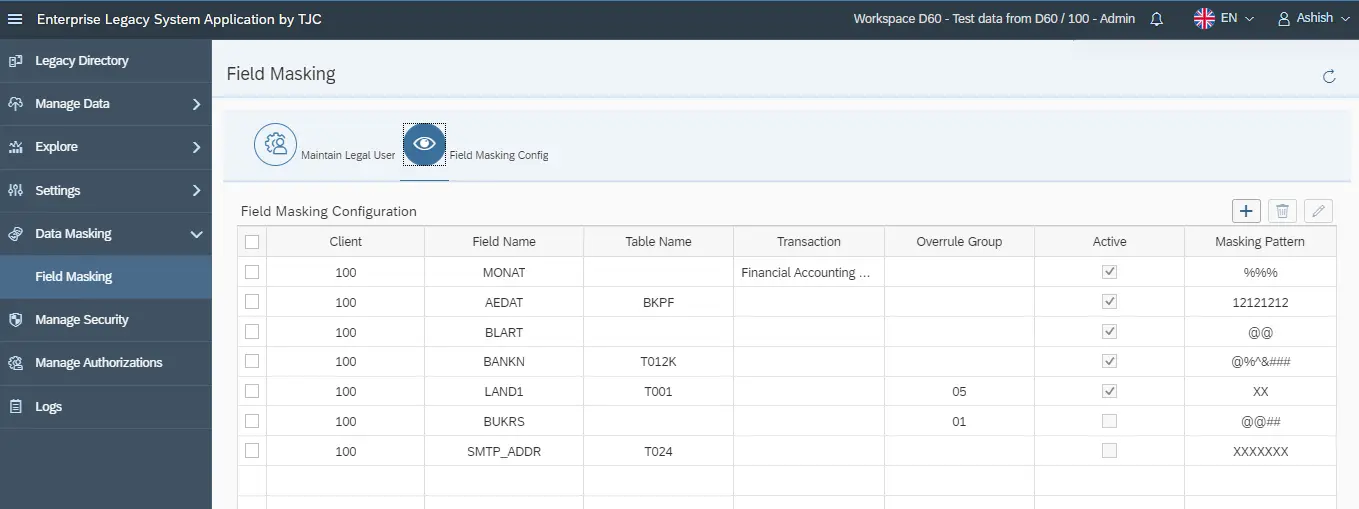
Data masking for sensitive fields. ELSA supports field-level data masking based on user authorisation levels. Sensitive information such as social security numbers, salary details, and bank account data can be masked for users who do not require full visibility, while remaining accessible to authorised personnel. This ensures compliance with the principle of least privilege and reduces the risk of unnecessary data exposure.
GDPR-compliant deletion. When retention periods expire, ELSA enables systematic, auditable deletion of data. This is critical for meeting GDPR’s data minimisation requirements — ensuring that personal data is not held beyond its lawful retention period while maintaining a clear record that deletion has occurred.
A single archive for all legacy HR data. Whether your organisation is decommissioning SAP HCM, migrating from a third-party HR system, or consolidating data from multiple legacy platforms, ELSA provides a centralised repository. This simplifies compliance management, reduces audit preparation time, and eliminates the fragmentation that comes from maintaining multiple legacy environments.
Conclusion and takeaways
Migrating to SAP SuccessFactors Employee Central Payroll is a significant step forward for HR transformation. It delivers a modern, intelligent payroll platform that supports global operations and positions organisations for future innovation. However, the migration journey does not end with go-live — legacy payroll and HR data must be managed with the same rigour and foresight.
Organisations that neglect historical data expose themselves to compliance failures, audit risks, and unnecessary costs. Those that take a strategic approach — decommissioning legacy systems while preserving data in a secure, accessible archive — gain both immediate savings and long-term resilience.
key points to take away:
- Plan for legacy data from the outset. Payroll migration to ECP should include a clear strategy for historical data that will not move to the new platform. Waiting until after go-live creates unnecessary risk and complexity.
- Understand your retention obligations. HR data retention periods vary by jurisdiction and data type, and can extend to 30 years or more. Map your obligations early and ensure your archiving solution can support them.
- Decommission legacy systems with confidence. ELSA enables organisations to retire legacy payroll and HR systems entirely, eliminating ongoing maintenance costs while preserving full, compliant access to historical data.
- Protect sensitive data throughout its lifecycle. Role-based access controls, data masking, audit trails, and GDPR-compliant deletion are not optional extras — they are essential components of responsible HR data management.
- Future-proof your data for AI and analytics. By extracting legacy data into AI-ready formats such as parquet and integrating with SAP Datasphere, ELSA transforms historical records from a compliance burden into a strategic asset.
Watch the webinar on demand: Driving GenAI innovation in S/4HANA transformation with legacy system decommissioning.
SAP SuccessFactors Employee Central Payroll powers your future payroll. ELSA safeguards your past. Together, they enable a truly intelligent, compliant HR landscape. Contact TJC Group today to discover how we can help you manage your HR data transformation with confidence.
Sources of information
- Employee Retirement Income Security Act (ERISA).
- Code du travail
- German Commercial Code (Handelsgesetzbuch)
- German Fiscal Code (Abgabenordnung)
- HRMC website
- 2025 to 2026 guidance: Employer further guide to PAYE and National Insurance contributions
- Japanese law translation Act on the Protection of Personal Information(Act No. 57 of 2003)
FAQ's
Q1. Can HR records in SAP systems be deleted a few years after an employee leaves?
Answer:
It’s not that simple. The retention periods for HR data (including pension and payroll) vary across industries and countries. The standard retention periods for personnel and payroll records often range from 5 to 10 years. However, some categories of HR data must legally be preserved for several decades. This is especially true for pension-related records, occupational health files, workplace accident documentation, employee records of exposure to hazardous substances, and heavily-regulated industries such as pharmaceuticals, energy, oil and gas or transport
Q2. Why can’t all historical payroll data be migrated into SAP SuccessFactors Employee Central Payroll?
Answer:
Legacy payroll systems often contain decades of historical data stored in outdated or proprietary formats that do not align with modern cloud payroll structures. In many cases, migrating all historical records into SAP SuccessFactors Employee Central Payroll (ECP) would be technically complex, costly, and unnecessary. Organisations therefore need a secure strategy to preserve access to historical payroll and HR data outside the live payroll environment.
Q3. How long must HR and payroll data be retained in the United States?
Answer:
HR data retention requirements in the United States vary depending on the type of record and the industry. Under OSHA regulations, employee medical and exposure records relating to toxic substances or harmful physical agents must generally be retained for the duration of employment plus 30 years. Pension-related records governed by ERISA may also require very long-term or indefinite retention to validate employee benefits. Industries commonly affected include healthcare, pharmaceuticals, manufacturing, oil and gas, and nuclear energy
Q4. What are the HR data retention requirements in France?
Answer:
In France, payroll and HR records are generally retained for at least 5 years, while certain financial and payroll-related documents may require retention for 10 years. However, pension-related records often need to remain accessible for several decades, sometimes more than 30 years. Occupational exposure records, particularly those related to asbestos or hazardous substances, may require retention for up to 40 years
Q5. How long should HR data be retained in the United Kingdom?
Answer:
In the United Kingdom, payroll records are generally retained for at least 6 years. However, certain HR and occupational health records must be preserved much longer. Exposure records linked to hazardous substances may require retention for 40 years, while ionising radiation exposure records may require 50 years. Pension and public sector employment records can also require very long-term retention.
Q6. What are the HR data retention obligations in Germany?
Answer:
Germany imposes strict HR data retention obligations linked to payroll, tax, pensions, and social security compliance. Payroll and tax documents are generally retained for 6 to 10 years, while social security and pension-related records may need to be preserved for up to 30 years. Occupational health and workplace exposure records can also carry long-term retention requirements under German labour and safety regulations.
Q7. What should organisations know about HR data compliance in Japan?
Answer:
In Japan, the Act on the Protection of Personal Information (APPI) governs the handling of employee data, including payroll, medical, and sensitive HR records. Organisations must implement strict controls around data access, retention, and cross-border transfers. Japanese regulations are becoming increasingly enforcement-focused, with stronger penalties and mandatory breach notification requirements being introduced. This makes secure long-term HR data management particularly important for multinational organisations operating in Japan.
Q8. What are the risks of keeping legacy payroll systems running?
Answer:
Maintaining legacy payroll systems creates significant operational and financial burdens. Organisations continue paying for infrastructure, licensing, maintenance, security patching, and specialist support for systems that are no longer actively used. Legacy systems also increase cybersecurity risks and complicate compliance efforts, especially when sensitive HR data is spread across multiple outdated platforms.
Q9. Is archived HR data still accessible for audits and employee requests?
Answer:
It depends. If the data has been archived as flat files and decommissioned in a way that data traceability can be proven, then yes. Legacy system applications, such as ELSA by TJC Group, extract data from the original system and save it as a flat file. Afterwards, the legacy data, either from SAP ECC systems or non-sap systems, is accessible for authorised users on ELSA platform. Organisations can retrieve historical payroll results, tax records, pension information, employment contracts, and supporting documents to respond to audits, legal requests, pension disputes, or former employee enquiries. This ensures compliance while avoiding dependency on obsolete systems.
Q10. How does ELSA help organisations decommission legacy HR and payroll systems?
Answer:
ELSA provides a secure, SAP-certified archive platform built on SAP BTP that preserves historical HR and payroll data after legacy systems are retired. It enables authorised users to access payroll results, pension records, employment history, and supporting documents through a modern interface without maintaining the original legacy infrastructure. ELSA also supports audit trails, role-based access controls, data masking, and GDPR-compliant deletion.