


Author: Thierry Julien, CEO TJC Group
Does regulatory compliance require organisations to keep historical information in live SAP systems? Not necessarily. Retention obligations may apply to reports, transactional data or audit evidence, each with different requirements. This article explains how organisations can distinguish legal obligations from technical assumptions and develop SAP data archiving strategies that preserve compliance without unnecessarily retaining information in productive databases.
Table of contents
- A regulatory requirement is not automatically a technical requirement
- Understanding the retention requirements
- Real-life example: why retaining original SAP reports matters
- Can SAP data be archived during the statutory retention period?
- SAP data retention: why one approach does not fit all
- Conclusion
“We need to keep this data online for ten years. It’s a regulatory requirement.” This is a fairly common assumption around SAP data archiving projects, and it can significantly influence how organisations manage their data.
But does the regulation actually require transactional information to remain in SAP for ten years? Or does it require certain records to be preserved and made available when needed?
These are two different questions, yet they are often treated as one.
In this two-part blog series, we’ll explore the common misconceptions surrounding SAP data archiving and compliance and explain how organisations can translate regulatory obligations into practical technical decisions.
When retention obligations are interpreted as technical requirements without proper verification, organisations may end up keeping large volumes of historical information in their productive SAP systems unnecessarily. This can increase storage requirements, complicate database management and influence decisions about future ERP transformations.
The opposite is equally important. Moving data out of a productive system without understanding its retention and accessibility requirements can create compliance risks.
The starting point should therefore be the regulation itself, rather than an assumption about how SAP data must be stored.
A regulatory requirement is not automatically a technical requirement
Regulations generally establish obligations concerning the preservation, availability or protection of information. They do not necessarily prescribe how every record must be stored within an SAP environment.
For example, a regulation may require an organisation to retain certain financial information for a specified period. However, that does not automatically mean the underlying transactions must remain in the SAP HANA database throughout that period.
Before making technical decisions, organisations need to establish what the regulation actually requires.
Which records are covered? How long must they be retained? Must they remain accessible in a particular format? Are there requirements concerning integrity, traceability or retrieval?
Only after answering these questions can SAP teams determine the appropriate technical approach.
This distinction matters because retaining information and keeping it online are not necessarily the same thing.
Historical business data may be eligible for SAP data archiving while still being subject to statutory retention requirements. Whether this approach is appropriate depends on the applicable regulation, the data’s characteristics, and the organisation’s ability to meet its access and preservation obligations.
Compliance requirements should guide technical architecture, rather than being replaced by assumptions about the requirements.
Understanding the retention requirements
One challenge in SAP regulatory compliance is that the word archive can refer to different types of information.
Consider an organisation that submits a financial or tax report to an authority. Several types of records may be involved, but they do not necessarily have identical retention requirements.
The published report
This is the information actually submitted to the relevant authority.
Depending on the applicable rules, an organisation may need to preserve the original report, its submitted values and evidence of when or how it was filed.
The supporting documents
Invoices, accounting documents and other supporting records may have their own retention obligations.
These can include requirements concerning authenticity, integrity, accessibility and evidential value.
The underlying transactional data
The SAP transactions used to prepare the report represent another category of information.
These records may be required for audit purposes or to support the figures reported, but their technical lifecycle does not necessarily need to match that of the submitted report.
The distinction becomes particularly important when organisations need to demonstrate what was reported at a particular point in time.
Real-life example: why retaining original SAP reports matters
Imagine a business submits its December VAT return in January.
A few days later, an invoice relating to December is entered into SAP.
If the business regenerates the December report using the current data, the result may differ from the original submission, depending on the reporting logic and how subsequent entries are handled.
This illustrates why retaining the underlying transactions alone may not always provide sufficient evidence of what was originally reported.
Organisations may also need to preserve the submitted report and relevant supporting documentation.
Before deciding how long to retain information, organisations must first establish exactly what needs to be preserved.
Can SAP data be archived during the statutory retention period?
A common assumption is that information subject to a ten-year retention period must remain in the productive SAP system for ten years.
That is not necessarily the case.
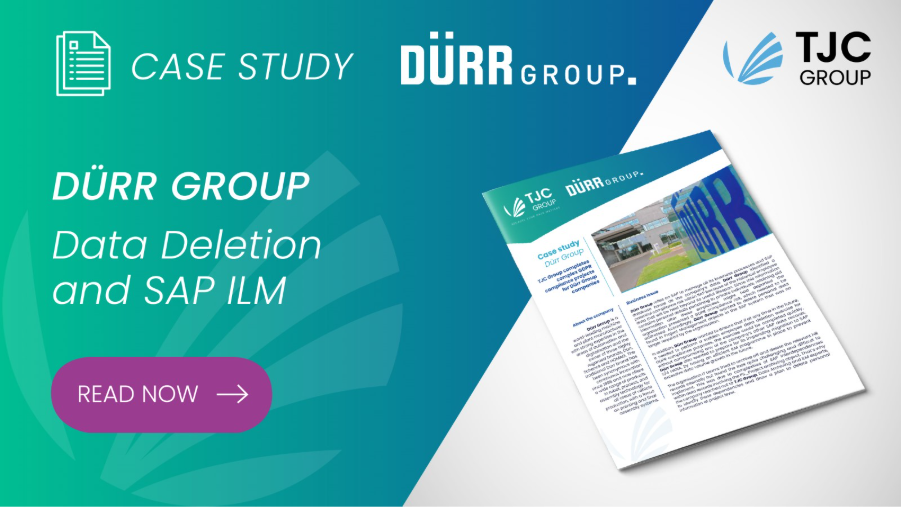
The legal retention period defines how long information must be preserved. The operational retention period determines how long it needs to remain in the productive environment.
These periods may differ.
For example, historical financial transactions may no longer be required for daily processing but may still need to remain accessible for audits, investigations or regulatory reporting.
In such circumstances, SAP data archiving may allow eligible records to be moved out of the productive database while preserving them for future access.
However, the archived information must remain available in a manner that satisfies the applicable requirements. Organisations need to consider how records will be retrieved, whether their business context remains understandable and how integrity and retention controls will be maintained.
The objective is to meet the legal obligation without automatically assuming that every historical transaction must remain online.
You might also be interested in the following blog article
SAP data retention: why one approach does not fit all
Not all information held in SAP is subject to the same regulatory requirements. Financial reports, electronic documents and transactional records may have different retention periods and preservation obligations, depending on the applicable laws.
For example, an electronically signed invoice may need to be preserved in a way that maintains its authenticity, integrity and evidential value. A submitted tax report may require organisations to retain the original figures and evidence of submission. The underlying transactional records, meanwhile, may be subject to separate obligations concerning retention, accessibility and auditability.
This distinction matters because rules governing electronic document preservation do not necessarily apply in the same way to every category of business information. Equally, retaining transactional data does not automatically satisfy an obligation to preserve an original document or submitted report.
Organisations must therefore assess the regulations governing each type of record rather than applying a single retention approach across their SAP landscape. The objective is to ensure that the right information is preserved for the required period, in a form that meets the relevant legal and regulatory obligations.
Conclusion
SAP data archiving compliance begins with understanding what regulations actually require. Retaining historical information does not always mean keeping it in a productive SAP system, and different record types may have different preservation requirements.
By reviewing the applicable regulations and distinguishing legal obligations from technical assumptions, organisations can make informed decisions about their SAP data retention policies without creating unnecessary restrictions.
In Part 2 of this series, we’ll explore how SAP teams can translate these requirements into practical archiving decisions while maintaining regulatory compliance. Stay tuned to our blog, subscribe to our Data Management Newsletter if you do not want to miss part 2!
FAQs
Q1. Does regulatory compliance require SAP data to remain online?
Answer:
Not necessarily. Regulations may require information to be retained and accessible without specifying that it must remain in the productive SAP database. The applicable legal requirements, record type and retrieval obligations determine whether archiving is appropriate.
Q2. Can SAP data be archived before its statutory retention period ends?
Answer:
Yes, where the applicable regulations and SAP archiving procedures permit it. Archiving can move eligible information out of the productive database while preserving it for the required retention period. Accessibility, integrity and other applicable controls must still be maintained.
Q3. Do all SAP records have the same regulatory retention requirements?
Answer:
Depending on the applicable regulations, organisations may need to retain the original report and supporting evidence. Regenerating a report later may produce different results if the underlying data has changed.
Q4. What should organisations check before defining SAP data retention policies?
Answer:
Organisations should identify the relevant regulation, determine which records it covers, establish the required retention period and clarify any accessibility, integrity or deletion obligations. Legal, compliance and SAP teams should then agree on the appropriate technical implementation.
Q5. Does regulatory compliance require preserving the original submitted report?
Answer:
Depending on the applicable regulations, organisations may need to retain the original report and supporting evidence. Regenerating a report later may produce different results if the underlying data has changed.