 TJC Group
Home » Rise with SAP Data Archiving Pricing
1 Your system→ 2 Your price→ 3 Talk to us
Left alone, 1.49 TB Archived, 0.56 TB
Crossing that line costs six figures a year, and every year after it. Archived, the same system sits at 0.56 TB and never reaches it.
Step 1 · Your system
Every figure recalculates as you change an input. The assumptions behind them are TJC Group's standard figures.
Do you know your system figures?
We fill the sliders with what a company of that profile typically runs, then you refine anything. Nothing here is sent to us.
S/4 · Medium
Your HANA data footprint, which is what the T-shirt size is sized on.
DBACOCKPIT shows used memory on your HANA system, and your weekly EarlyWatch Alert carries it on page one. A disk total from DB02 is roughly 1.4 times larger, so that number does not belong here. TAANA tells you which tables hold the volume.Compound. 20 to 25 percent is normal for a busy transactional system.
DB02 history points twelve months apart, divide the later one by the earlier one and subtract one. The growth trend in your EarlyWatch Alert gives the same answer without a system login.Ten included. Extra objects are priced separately.
—
—
Your inputs, TJC Group's archiving model. The year-end figures are calculated and the capacity result uses them. The saw-tooth between those points illustrates the archiving pattern rather than a simulated run schedule.
The 95% is the archiving ratio on the records a session selects, meaning the data that has passed its residence period. It is not 95% of your database. Your database reduction is the figure above: 4.1 TB of 8.0 TB today, because the rest of your data is either still inside its residence window or not archivable by design.
Your T-shirt size and your planning threshold.
Indicative estimate based on published cloud infrastructure rates and TJC Group's standard project assumptions. It is not a quotation or a guarantee of savings. Full disclaimer · Ask a question
The link opens this exact model with every input you set. Send it to a colleague and they see the same figures. You do not need to give us your email address.
This model uses standard assumptions. A TJC Group archiving specialist reviews your real data volumes, growth and archiving objects, then prepares a detailed proposal with confirmed figures and a project plan.
The step-up figure moves in steps rather than smoothly, because a T-shirt size is either breached or it is not. Small changes to growth can move it a long way, and a faster-growing system can show a smaller avoided cost when archiving no longer keeps it under the ceiling either.
The figures use TJC Group's standard assumptions for storage, admin time and downtime, and the published infrastructure rates exactly as supplied.
Step 2 · Your price
Priced from the same RISE archiving rate card we put in a formal proposal.
Have these figures validated against your own system
—
Indicative figures, not a quotation or a guarantee. Read the disclaimer
If your system does not fit these bands
Your configuration
Built from the inputs you entered, and shareable exactly as you are seeing it.

TJC Group · SAP data archiving for RISE with SAP
Indicative figures based on TJC Group's published rate card and the inputs you entered. This is not a formal quotation.
These figures come from the published rate card applied to the inputs you entered, and they exclude VAT. They are indicative. A formal quotation follows once a specialist has validated your system data, your object scope and your residence rules, and the figures can change on that review.
Share it internally
A ready email opens in your own mail client with the link already in it. The message comes from you, and whoever opens it sees exactly what you see.
We do not email anyone on your behalf, and the address stays in your own mail client.
What happens next
Before you decide
The work does not stop at go-live. These rows show what carries on, and who carries it.
| Do nothing | Your team plus a job scheduler | One-off consultancy project | TJC Group managed on RISE | |
|---|---|---|---|---|
| Monthly ownership | Nobody | Whoever has time that month | Nobody, once the project closes | TJC Group, every month, under contract |
| Archiving ratio measured | No | No native reporting | At handover only | Per session, reported monthly |
| Variant creation across objects | No archiving runs | Manual, hundreds a month | Manual after handover | Generated automatically by ASC |
| Country or entity suspended for an audit | No archiving runs | Can stall the whole schedule | Depends who is left | Others keep running, by design |
| Growth against your RISE size | Found out at renewal | Only if someone watches | Out of scope | Alerted before you breach your size |
| Cost profile | Rising storage and risk | Hidden internal cost | Day rates, then no owner | Fixed monthly, published rate card |
The automation behind the service
ASC is TJC Group’s SAP certified add-on, and it is what runs your archiving. It automates and governs the whole data lifecycle, from archiving through ILM retention to compliant destruction, across your SAP systems, from one point of control.
 Watch the four-minute walkthroughASC running a session from start to finish.
 Illustration of the ASC view. The objects, the sequence and the blocked windows are agreed with you during set-up.
What the ASC automates
ASC carries the business logic of SAP archiving and ILM. You configure it once, and it builds every session from your own Customizing and keeps it correct on every run.
Variants are generated from your own Customizing, down to company code, country and document type. Nobody writes them by hand, and nobody forgets one.
Archiving objects run in the right order. Dependencies are defined once and respected on every run, including across systems.
Block archiving during your peak periods, so your users keep the performance they need at the moment they need it.
Pause one archiving object without interrupting the rest, ahead of a period of heavy business activity.
Every session documents itself with company code, date and file details, so you always know what sits inside each archive file.
Deletion runs strictly in line with your retention policy, and only once the audit extracts such as DART have been generated successfully.
Why it matters
Less manual administration, archiving that stays consistent, and an SAP database that stays under control for the whole of your RISE contract.
Ask for a demo of ASCWhat the service includes
Archiving stays effective only when somebody governs it. TJC Group runs two sets of work, one operational and one strategic, and both of them are in the contract.
An archiving monitoring report, with the archivability rate and session tracking.
Automated archiving sessions across your objects, country by country.
ASC updates and health checks, so archiving keeps running as your system changes.
A data-management report and a data deletion round, with TJC Group’s recommendations.
Growth alerts if your volume starts to threaten your RISE commitment.
Joint steering on scope, priorities and the roadmap ahead.
One partner and one governed service, so your S/4HANA data stays lean, compliant and under control for the whole term.
Where this sits in SAP's own guidance
SAP defines a Clean Core across five dimensions. Archiving lives in the Data dimension: keeping data lean, compliant and high quality over the life of your S/4HANA system.
Configuration, master and transactional data that is accurate, complete, consistent, timely, valid and unique.
Archiving removes outdated and redundant records, so the live core keeps only relevant, high-quality data.
Control volume to optimise memory and disk, with no outdated, unused or redundant information.
Scheduled archiving of your objects with automation, plus continuous archivability and growth tracking.
Store and process personal master data only where there is a justifiable purpose.
An annual data-management report and data deletion with TJC Group’s recommendations, keeping retention defensible.
“A clean core isn’t a one-time project. It’s an ongoing commitment with enormous benefits in the long run.”SAP, What is a clean core?
Our commitments
Set-up is invoiced 50% on receipt of order and 50% one month after. Managed archiving is invoiced monthly, starting with the first set-up invoice. Payment at 60 days.
We target 95%+ per session, measure it continuously and report it to you every month, per object. A session that lands below target is named in that report rather than left out of it.
Archive files stay in your SAP-managed store. No custom development in your core, and archived data stays readable through standard SAP transactions.
Your formal quotation is built from the card on this page: flat set-up across every T-shirt size, monthly by published band, extra objects at the published rate. No customer-specific mark-up.
The SAP certificates, the published customer stories and the sample contract are available before you commit. Your own security, legal and procurement teams can review the evidence in their own time.
Nothing charged before both signatures. Notice terms sit in the contract, not an annexe. Leave, and your archived data stays where it is and stays readable.
Billing and settlement
About TJC Group
Archiving is easy to start and hard to keep running. Four things decide whether you are still getting the benefit long after the implementation is signed off.
TJC Group has worked on SAP data management since 1997 and has run dedicated archiving teams from the beginning. The questions your rollout raises, about what can be archived, what has to stay readable in SAP and what your auditors will accept, have been answered on other SAP systems first. You spend your time deciding rather than researching.
Archiving Sessions Cockpit is TJC Group’s own ABAP add-on, certified by SAP for deployment on S/4HANA Cloud Private Edition under RISE with SAP. It enhances the standard SARA process rather than replacing it. When your system needs the tool to behave differently, the request reaches the developers who maintain it, because 43% of the workforce works in research and development.
TJC Group operates worldwide, with its own teams across Europe, India and the Americas and distributors covering the other regions. Wherever your entities sit, archiving brings local retention rules, local language and a local working day into the sessions, and you get people who already work in those places.
Each month you receive a written report on the archiving that ran and on how your database is tracking against the size you committed to. An archiving programme that stops running rarely announces itself. That report is what you show your own management, and what tells you early that something needs attention.
Every month that proof arrives in writing. This is the report it comes in.
The archivability ratio for the month, every session that ran and the volume it removed, and the same figures broken down by archiving object. Anything that needs a decision is flagged in it rather than left for your team to find.
The contents of the report are agreed with you during set-up.
Our customers
Any industry, any size, anywhere SAP runsThese are companies that chose to keep their SAP data under control rather than pay for it to grow. They run different systems, in different industries, in different parts of the world.
Questions and answers
The mechanism is based on standard ADK processes, yes, and your team could start tomorrow. What you are buying is the part that stops when nobody owns it: the monthly work, the automation across archive objects and entities with the Archiving Sessions Cockpit, the optimisation of archive sessions to ensure the highest archiving ratio is achieved, the monthly reporting, and somebody accountable for it every month. Plenty of teams can start archiving in SAP. Keeping it running, measured and accountable over time is the hard work that falls behind.
No custom development goes into your system. ASC is an SAP-certified ABAP add-on and the archiving itself uses standard SAP objects. SAP counts data as one of the five Clean Core dimensions, so this is the standard route to satisfying it rather than a deviation from it.
Yes, through the standard SAP transactions and reports that support archive access. Proving it for each object is part of the technical test and your UAT, before anything runs in production. That is why regression testing happens before go-live rather than after it.
We do. Sessions are scheduled and sequenced by ASC, we customise the ASC to your own rules and policies, we monitor the sessions, handle errors, restart from the correct point, and report monthly. Your team agrees the rules and the residence and retention policy. Nobody on your side monitors sessions overnight.
Then you will know, in the first monthly report, with the reasons listed per object. A low ratio usually means open items are blocking archiving, or a residence rule that is too conservative, and we work through both with you.
We are transparent about what the number means: the ratio is measured on the records a session selects, which is data past its residence period. It is not a claim that 95% of your database disappears.
Archiving before the move costs less than archiving after it. Every terabyte archived before the move is a terabyte you do not migrate, do not test, and do not pay to host on the other side. Archiving before a migration is the single most common reason our customers start.
Into your SAP-managed storage on RISE, as part of your own landscape. The connection to the TJC Group SAP BTP environment is for orchestration and monitoring, not for holding your business data.
Expected, and the documents already exist. Send us the list when you speak to us and we return what is on it: the data processing agreement and our GDPR position, the security overview covering architecture, access model and the SAP BTP connection, our SAP partner status and ASC certification, the insurance certificate and company registration, published customer material, and the sample contract you would be signing.
Because the work is the same: remote analysis, strategy, housekeeping, SOFFCONT1, ASC installation. What scales with your size is the ongoing service, which is why the monthly follows your T-shirt size. A flat set-up is what makes it possible to publish a price at all.
Your notice period is set out in the contract you sign. Your archived data stays in your system, readable through standard SAP, whether we are still working together or not. Nothing about this creates a dependency you cannot exit.
If your question is not answered here
Before you decide
Their words, and the numbers from their own systems.
There’s this cool spreadsheet you can play with: if I want to archive five years, I’m going to get this. It profiles your growth so you can see how you move the levers to keep your system flat, have a small amount of growth, or even negative growth.Senior ManagerDiversey, a Solenis company
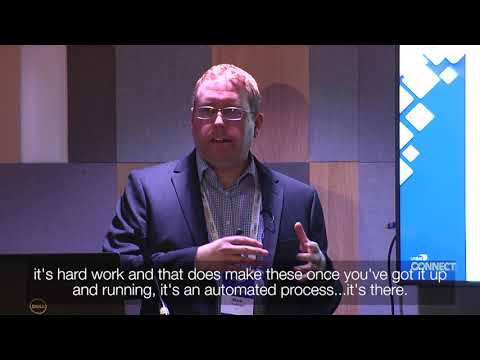
BT Group’s partnership with TJC Group has been very useful to us, as TJC brings a tremendous amount of knowledge about data archiving to supplement our teams. Automation is the big win.Mark HolmesBT Group

TJC Group have the Archive Sessions Cockpit, which basically automates the hell out of your archiving process. It gives you complete control over it. If we hadn’t had the Archive Sessions Cockpit, we wouldn’t have been able to move and adjust and change our approach as quickly and easily or have it as controlled.Senior ManagerDiversey, a Solenis company
TJC Group successfully implemented 15 objects over a 5-month period. Completing this phase prior to migration to the Cloud meant that there was a reduction of 2.1TB in data volume [on] the Production server, resulting in direct savings on storage costs.SAP Technical Services ManagerDunelm
Archiving on an ongoing basis will be very important because as soon as we have migrated to S/4 HANA, we will be archiving our data regularly to reduce database volumes and cut the cost of system ownership.Rudolf StraussCommercial & Operations Division IT Manager · Dürr Group
Step 3 · Talk to us
Your price, your rate card and your price summary are all on this page, and they were there before you gave us anything. When you want them tested against your own system, a specialist will review them with you in fifteen minutes.
Or keep the model as it stands:
Speak to a specialist
You speak to the people who scope and price this work every week.
Talk to us
Your question reaches an SAP archiving specialist, and the answer usually comes back the same working day. It can be the figures you have been testing, the objects you have in scope, the questions your security team will raise, how this sits with your S/4HANA timing, or a clause your procurement team wants explained.
Loading the form…
Every figure on this page is an indicative estimate. This includes savings, value, return on investment, payback periods and comparisons with the investment. The figures are calculated from the inputs you enter, cloud infrastructure price lists and TJC Group's standard project assumptions. Examples and industry estimates are illustrations, not results from a specific customer.
Nothing on this page is a quotation, an offer or a guarantee of savings or results. Your actual results depend on your SAP system, your data and your archiving scope. Prices exclude VAT and are confirmed only in a formal quotation from TJC Group, after a specialist has reviewed your system. Customer results quoted on this page belong to those customers and may not be repeated on other systems.
—
This link opens the exact model you configured, with every input you set. Send it to a colleague and they see the same figures.
Your inputs are saved in the link itself.
Your request has reached the TJC Group archiving team.
