



Author: Ravindra Pawar, Senior Software Engineer II, TJC Group
Decommissioning legacy systems has traditionally been viewed as a complex, platform-specific challenge. While ELSA has long been the trusted solution for SAP decommissioning, we’re excited to announce a significant expansion of our capabilities. Through innovative data integration techniques, ELSA now offers a comprehensive approach to decommissioning non-SAP systems, creating a truly universal legacy data management platform. Authored by our ELSA expert, Ravindra Pawar, this blog explores all the insights you need to know!
Table of contents
Introduction
Every organisation faces the same fundamental dilemma when modernising their IT landscape – how do you preserve decades of valuable historical data while eliminating the cost and complexity of maintaining outdated systems? This challenge extends far beyond SAP environments, affecting everything from legacy CRM systems to custom-built applications that have served businesses faithfully for years. To tackle this, we are taking our expertise to the next level by extending ELSA’s capabilities to handle any legacy system, regardless of its original platform or architecture.
The universal challenge of legacy data management
Legacy systems present organisations with a costly paradox. These systems often contain decades of critical business data, regulatory records, and historical insights that remain valuable long after the original application becomes obsolete. However, decommissioning legacy systems maintaining these systems purely for data access creates significant overhead in terms of licensing costs, infrastructure requirements, and specialised support.
The challenge becomes even more complex in today’s hybrid IT environments. Modern organisations typically run a mixture of SAP systems, cloud-based SaaS applications, custom-built solutions, and legacy platforms that may date back decades. Each system has its own data structure, access methods, and maintenance requirements, creating a fragmented and expensive data landscape.
Traditional approaches to this problem often involve system-by-system solutions, each requiring specialised knowledge and custom development. This piecemeal approach not only increases costs but also creates multiple points of failure and compliance risk.
ELSA’s proven SAP expertise
For SAP systems, we rely on TJC’s comprehensive suite of solutions including TJC Group’s AEC, DSC, Doc_EX, and RAC, which considers the SAP-specific requirements that generic data management tools simply cannot address. These solutions represent a highly specialised, integrated platform built with deep understanding of SAP’s unique data architecture, archiving processes, security model, and regulatory reporting requirements.
Our SAP-focused approach has proven its value across hundreds of implementations worldwide. By understanding the intricacies of SAP’s data relationships, business object structures, and compliance requirements, we’ve helped organisations reduce their SAP system footprint by up to 70% while maintaining full data accessibility and regulatory compliance.
This expertise in managing complex, business-critical data has provided the foundation for our expansion into non-SAP environments. The principles of data integrity, regulatory compliance, and user accessibility that drive our SAP solutions are equally applicable to any legacy system.
Expanding beyond SAP: A new frontier
For non-SAP systems, we now offer ELSA extract solution running at database level. This represents an additional way of managing non-SAP applications, not replacing existing methodologies but expanding our capabilities to address a broader range of the challenges that occurs while decommissioning legacy systems.
We’re expanding our data integration capabilities beyond traditional SAP systems by leveraging innovative data extraction methods and integration technologies. This new approach allows us to create a more flexible and scalable data management framework that can effectively manage data from a wider variety of sources, including modern SaaS applications and older, custom-built systems. This expansion addresses a critical gap in the market. While many organisations have found solutions for their SAP decommissioning needs, non-SAP systems have often been left running indefinitely simply because no viable decommissioning option existed. Our enhanced ELSA platform now provides a comprehensive solution for this universal challenge.
Technical innovation: Apache NiFi integration
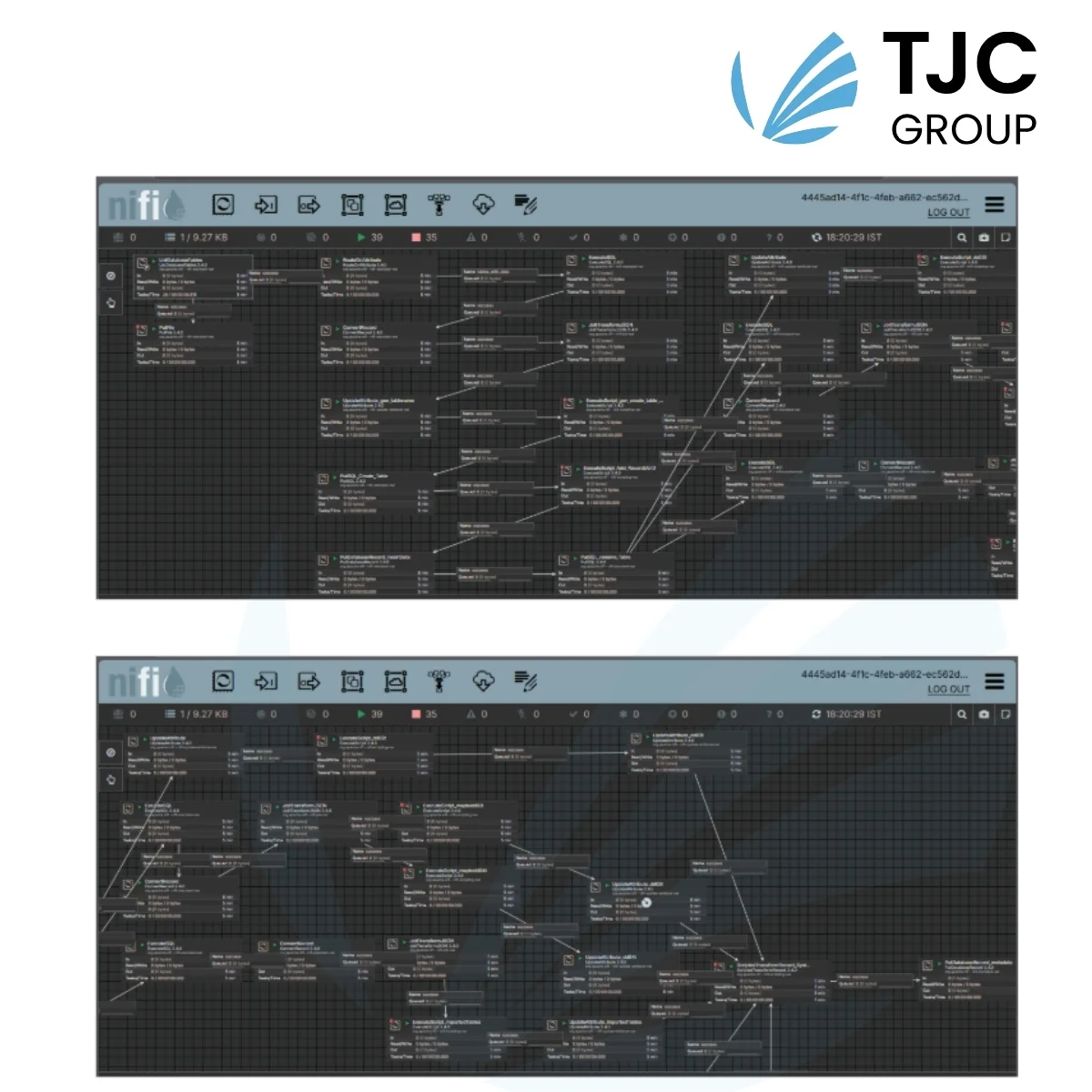
A robust and scalable data integration tool, Apache NiFi, serves as the bridge between legacy systems and ELSA’s archiving capabilities. As a matter of fact, our recent Proof-of-Concept (POC) using Apache NiFi demonstrates ELSA’s enhanced ability to ingest, archive, and display data from non-SAP sources. The technical approach centres on creating a seamless integration flow that can adapt to virtually any data source. By utilising industry-standard connectivity options and flexible data transformation capabilities, we can extract data from systems ranging from modern cloud applications to decades-old mainframe databases. This technical foundation provides several key advantages when decommissioning legacy systems. First, it leverages proven, enterprise-grade integration technology that organisations can trust with their most critical data. Second, it creates a standardised approach that can be adapted to different source systems without requiring extensive custom development. Finally, it maintains the data integrity and audit trails that are essential for regulatory compliance.
Here is a visual representation of the NiFi flow we developed:
The seamless data migration process
Our enhanced ELSA platform follows a structured approach to non-SAP data migration that ensures both technical success and business continuity. The process begins with connecting directly to the source system using appropriate connectivity methods, allowing us to execute standard queries to retrieve critical business data. After data extraction, sophisticated transformation processes ensure that it is properly structured, including the addition of unique identifiers to each record to ensure data integrity and traceability throughout the process.
The most innovative aspect of our approach lies in the dynamic creation of data dictionaries. These are comprehensive sets of tables that define how legacy system data should be displayed and accessed within ELSA. This includes detailed information about legacy system tables along with their descriptions, comprehensive lists of legacy system fields from all tables with their data types, lengths, descriptions, and relationships.
This metadata-driven approach ensures that data remains fully accessible and meaningful, even years after the original system has been decommissioned. Users can navigate and search the archived data as intuitively as they would in the original system, without requiring specialised knowledge of the underlying archive structure.
Watch webinar
Unlocking the value of archived data
After the data migration and metadata population are complete, archived data becomes fully accessible within the ELSA application. The interface provides a clear, organised view of imported business tables and their contents, proving that ELSA can function as a single, centralised repository for historical data from any source.
This accessibility is crucial for realising the full value of your data investment. Historical data often contains insights that can inform current business decisions, support regulatory investigations, or provide context for strategic planning. By making this data easily searchable and accessible, organisations can continue to leverage their historical information assets even after retiring the original systems.
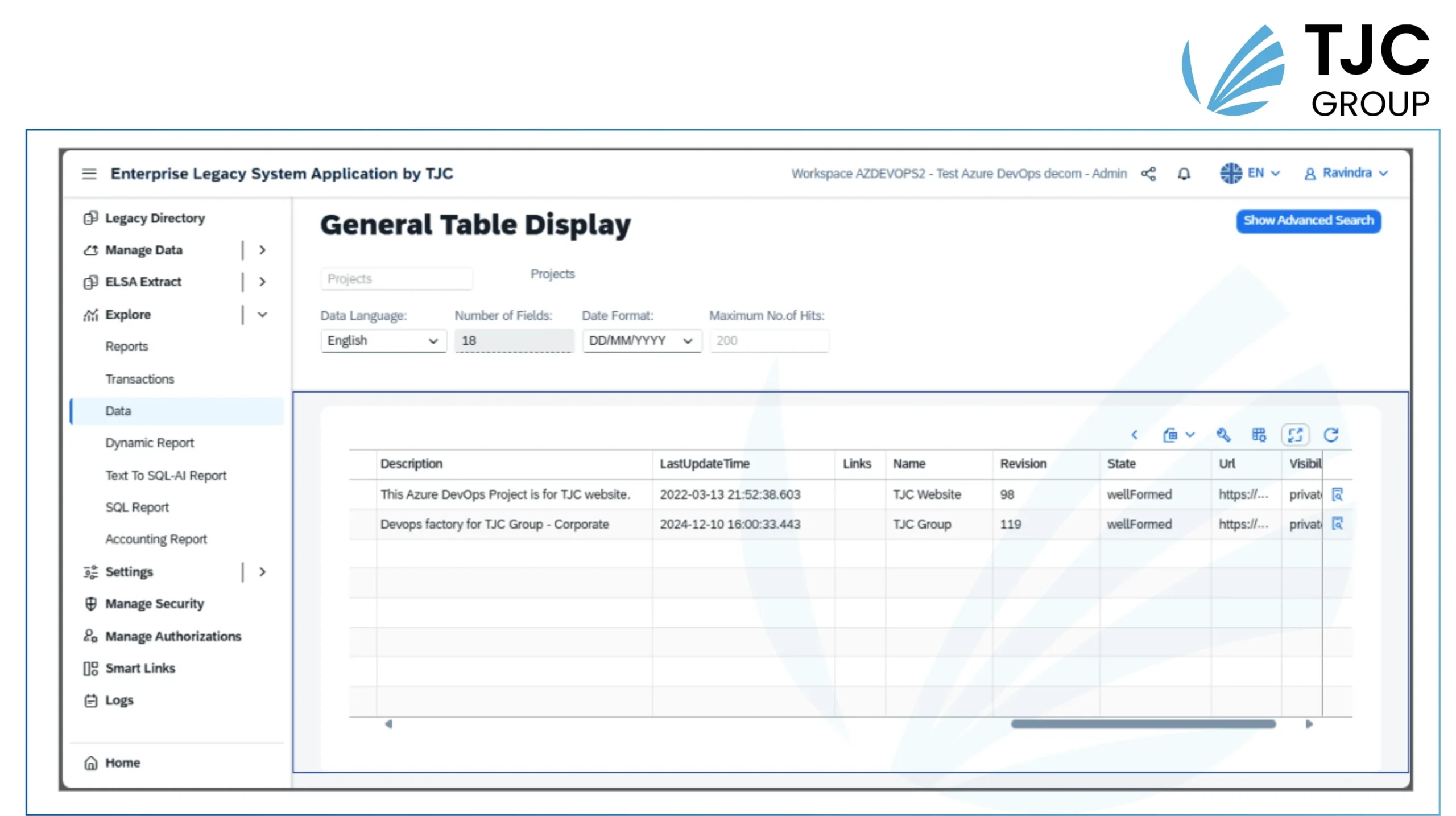
The unified approach not only simplifies data management but also compliance management. Rather than maintaining access to multiple legacy systems for audit purposes, organisations can direct auditors and regulators to a single, well-organised archive that contains all necessary historical information.
Business benefits of universal decommissioning
The expansion of ELSA’s capabilities delivers significant business value across multiple dimensions. Most immediately, organisations can significantly reduce their total cost of ownership (TCOs) by decommissioning legacy systems that are expensive and require high maintenance without losing access to critical historical data.
Beyond cost reduction, the centralised approach creates operational efficiencies. IT teams no longer need to maintain expertise in multiple legacy platforms, and business users can access historical information from a single, consistent interface. This consolidation also reduces security risks by eliminating multiple potential access points and simplifying data governance.
From a strategic perspective, universal decommissioning enables more aggressive IT modernisation initiatives. Organisations can pursue cloud migration, digital transformation, and system consolidation projects with confidence, knowing that their historical data will remain accessible throughout the transition.
The compliance benefits are equally significant. By maintaining comprehensive archives in a controlled environment, organisations can meet data retention and regulatory requirements while reducing the complexity of compliance data management. This is particularly valuable in industries, which are regulated heavily – where historical data access is frequently required for audits and investigations.
Conclusion
The extension of ELSA’s capabilities beyond SAP represents a significant milestone in enterprise data management. Our proven expertise in overall management of data combined with innovative integration technologies helped us create a truly universal solution for decommissioning legacy systems. This development addresses one of the most persistent challenges in IT modernisation, providing a comprehensive solution that works regardless of the original system’s platform or architecture.
For organisations planning their digital transformation journey, ELSA now offers the confidence to pursue ambitious modernisation goals without sacrificing access to valuable historical data. Whether you’re dealing with SAP systems, custom applications, or modern SaaS platforms, our unified approach ensures that your data remains accessible, compliant, and valuable.
The future of enterprise data management lies in flexible, comprehensive solutions that can adapt to any technical environment. With ELSA’s expanded capabilities, you can now experience the flexibility that you need, coupled with streamlined management of legacy data. Contact us today to discover how we can help you simplify your IT landscape whilst unlocking the full value of your historical data assets.